A historic morning in Durrës
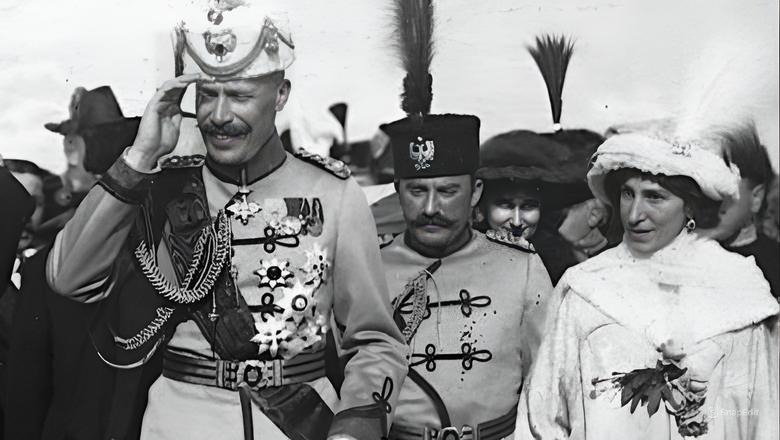
The morning of March 7, 1914 brought to the port of Durrës a sight that the newly independent Albania had never experienced before. On the shores of the Adriatic, amidst ceremonial cannons and cheers from the crowd, a tall man, dressed in a European uniform, stepped off the German ship Taurus : Prince Wilhelm zu Wied , who would become the first sovereign of the independent Albanian State .
Sent by the Great Powers of Europe , Prince Wilhelm zu Wied had accepted the task of leading a country that had just emerged from Ottoman rule, still unorganized, with provinces plagued by internal conflicts and foreign influences.
However, on that March day, in the eyes of the Albanians gathered in the square in front of the Durrës Prefecture, he represented the hope for a modern state, recognized and equal to other European nations .
Next to him stood Princess Sophie , while Austro-Hungarian, Dutch, and Albanian officers formed the guard of honor. Flags with the eagle of Skanderbeg fluttered, and the feeling of a great beginning was felt in the air.
Prince Wilhelm zu Wied’s speech in Durrës
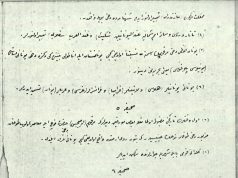
(Transcribed from the original French manuscript, preserved in the Central State Archives)
Albanians,
With infinite joy I have accepted the throne of Albania.
I could not refuse the honor of governing a brave and noble people, who have written glorious pages in the history of Christian Europe.I have come with a burning desire to show Europe that this new Albania, and the heroes who inhabit it, deserve the place they deserve; that they are capable of embracing Western civilization and the light of progress, which that same Europe owes to their bravery.
From the moment I set foot on this sacred land of my new homeland, I decided to work for its revival.
But a handful of robbers, driven by secret influences, tried to thwart this noble goal.I am speaking of the sad uprising that has recently broken out in the south of my Kingdom.
My heart aches for this tragedy.
I will devote myself with all my strength to putting an end to this dangerous insurgency.With the help of my people — a people who despise death as much as they love the sacred land of their homeland — I am convinced that we will soon free Albania from these barbaric hordes and ruthless murderers who respect neither the lives nor the homes of my loyal subjects in the south of the Kingdom.
Strong in our right, and supported by the benevolent friendship of the civilized world, I myself, if necessary, will march to restore order and peace.
I will dedicate my heart and strength to the liberation of my beloved Albania from its enemies.
Let us all be guided by feelings of honor and humanity.Albanians!
Be convinced that with your proverbial bravery and the sanctity of our cause, Divine Responsibility will grant us victory, as well as the peace so necessary for our national rebirth.Be assured that my heart will always beat with yours — for the happiness and glory of Albania.
— Prince Wilhelm zu Wied
Durrës, March 7, 1914
A brief hope, an eternal memory
This speech, preserved in Prince Wilhelm zu Wied’s original manuscript in the Central State Archives , is one of the most moving documents of the beginnings of the Albanian state. It marks the moment when Albania first had an internationally recognized monarch and an attempt to establish modern institutions on a land divided by traditions, beliefs, and foreign influences.
But history took a different turn. Just a few weeks after this speech, riots broke out in the South, Greek and Turkish influences spread, and the Durrës government failed to maintain order.
In September 1914 , after only six months on the throne , Prince Wilhelm zu Wied was forced to leave Albania to return to Germany, as Europe was engulfed in World War I.
However, he remained in the memory of many Albanians as an idealized figure who tried to bring Europe to Albania , but clashed with the difficult reality of the time.
Legacy
His original manuscript, written in French and stained by time, carries today not only the words of a young monarch, but the dream of a nation seeking its place on the map of Europe.
Prince Wied’s speech is more than a political statement — it is a moral testament , a testament to the idealism that arises on the borders between romanticism and historical reality.
🕯️ Conclusion
When we read his words today, we feel the echo of a unique moment: Albania, newly born from history, faces Europe through the voice of a foreign prince who called this country “my new homeland.”
A speech written with sincerity and hope, preserved for more than a century in the archives, and which today returns as a forgotten page of Albanian history.