Traveling across the forgotten map of ancient Asia
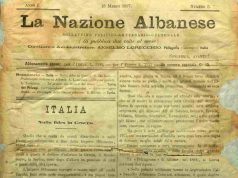
In rare archival collections, hidden between the pages of a Venetian edition from 1740, lies an eighteenth-century account of the ancient world. Written in erudite Greek of the 18th century, and based on even earlier sources, this text takes us to the roots of civilization: to the geographical map of Asia in the era of antiquity and to the origin of one of the most powerful kingdoms that history has known – Assyria .
This English version of the Albanian article presents, in an expanded narrative, the contents of this precious manuscript. It marks the transition from the geographical description of Asia to the grand opening of Book Three: “The History of Assyria” .
🟩 Map of Ancient Asia – How Ancient Authors Imagined the World
The 18th-century author, following the tradition of ancient historians such as Strabo, Herodotus, and unknown Hellenistic authors, attempts to provide a “general view of Asia” , not through modern borders, but through the lands, rivers, and peoples known to the world of the first centuries BC.
1. The North – the land of fearsome tribes
The journey begins in the far north: Sarmatia and Scythia , the lands of the Sakas and Massagetae, who appear even in classical authors as powerful, often lawless, and almost invincible peoples. The Tanais (Don) River is marked as the great border between Europe and Asia.
2. East Side – towards India
The text mentions the area of ancient India and its division by the Ganges River, as described by Greek authors after the conquests of Alexander the Great.
3. Armenia – the gateway to the Caucasus
Next comes the description of Greater and Lesser Armenia , mentioning important cities such as:
- Komana
- Arabessus
- Melitene
- Satala
And of course, the Araxes River , a natural line that has divided empires for thousands of years.
🟧 Caucasus Regions – When “Albania” Wasn’t Albania
One of the most interesting parts is the mention of Albania .
But this is not modern Albania .
Caucasian Albania was an ancient kingdom between the Caucasus Mountains and the Caspian Sea (present-day territories of Azerbaijan and Dagestan). It is frequently mentioned in Greek and Roman sources and was part of the political system of the region along with Armenia and Iberia (present-day Georgia).
🟫 Largest part – Asia Minor (Anatolia)
The bulk of the text is dedicated to Asia Minor , the heart of the Greco-Anatolian world, where well-known regions and cities are mentioned in turn:
Pontus and the Black Sea coast
- Trapezus (Trabzon)
- Sinop
- Amisus
- Heraclea
- Bithynia
- Nicaea
- Nicomedia
- Chalcedon
Troas and Mysia
This region also included Ilium – Troy , the legendary city of the Homeric epics.
Aeolis and Ionia – the cradle of Hellenic culture
The list of cities here is amazing:
- Smyrna
- Ephesus
- Miletus
- Colophon
- Clazomenae
- Teos
These cities have been centers of philosophical, literary, and scientific thought.
On these shores Homer was sung, Heraclitus wrote, and Thales measured the stars.
Caria, Lydia and the Greek islands
The text includes:
- Laodicea
- Magnesia
- Halicarnassus
- Knidos
- Samos
- Kos
- Patmos
- Rhodes
The question naturally arises:
How much history has this coast seen?
🟥 From the Phoenicians to Palmyra – South Asia
The author then moves south:
Phoenicia
- Tyre
- Sidon
- Byblos
- Beirut
The birthplace of the alphabet and Mediterranean trade.
Syria
- Antioch
- Laodicea
- Seleucia
- Apamea
Important centers of the Hellenistic and Roman world.
Commagene and Palmyra
Where the mixed Greek-Eastern culture was born, represented by the monumentality of Nemrut and the splendor of Palmyra.
Arabia Petraea
The list includes:
- Petra
- Bosra
- Mount Cassius
- the great deserts
- and “Happy Arabia” – Arabia Felix
A world of caravans, incense, and merchants.
🟩 Book Three – From geography to history
After a long geographical journey covering hundreds of cities and provinces, the text reaches the grand title:
“Book Three – History of Assyria”
The author announces:
“This book will tell the history of the kingdom of Assyria, [wording concerning Nin/Ninus unclear in the Albanian transcription], as well as of Babylon, Media, and Lydia.”
In the historical narrative of this edition, the account turns to Assyria , the forerunner of the empires that would shape the civilized world.
Conclusion – On the threshold of Assyria
The first parts of the manuscript take us to a world that today we can only touch through words. A world where cities rose and fell like waves, and where each name carried the weight of an entire civilization.
And now…
The battles, the kings, the legends, and the rise of Assyria are just beginning.
In the next article on Historiani.com we will bring the full chapter on Ninus, Nineveh, Assyria and Babylon , built on this unique source.