On April 6, 1667, the city of Dubrovnik (then the Republic of Ragusa) was struck by one of the greatest natural disasters in the history of the Adriatic. Within minutes, a devastating earthquake toppled churches, monasteries, palaces, and houses, while the ensuing fires burned down everything that remained.
The city that was known as the “jewel of the Adriatic” was reduced to rubble and ashes. Over 3,000 people lost their lives, including many nobles, merchants, and clergy. What makes this event even more extraordinary is the testimony of an Albanian priest from Shkodra, Vital Andriosi , who wrote a letter to his friend Diodor Bosdari in Ancona, describing the tragedy in chilling detail.
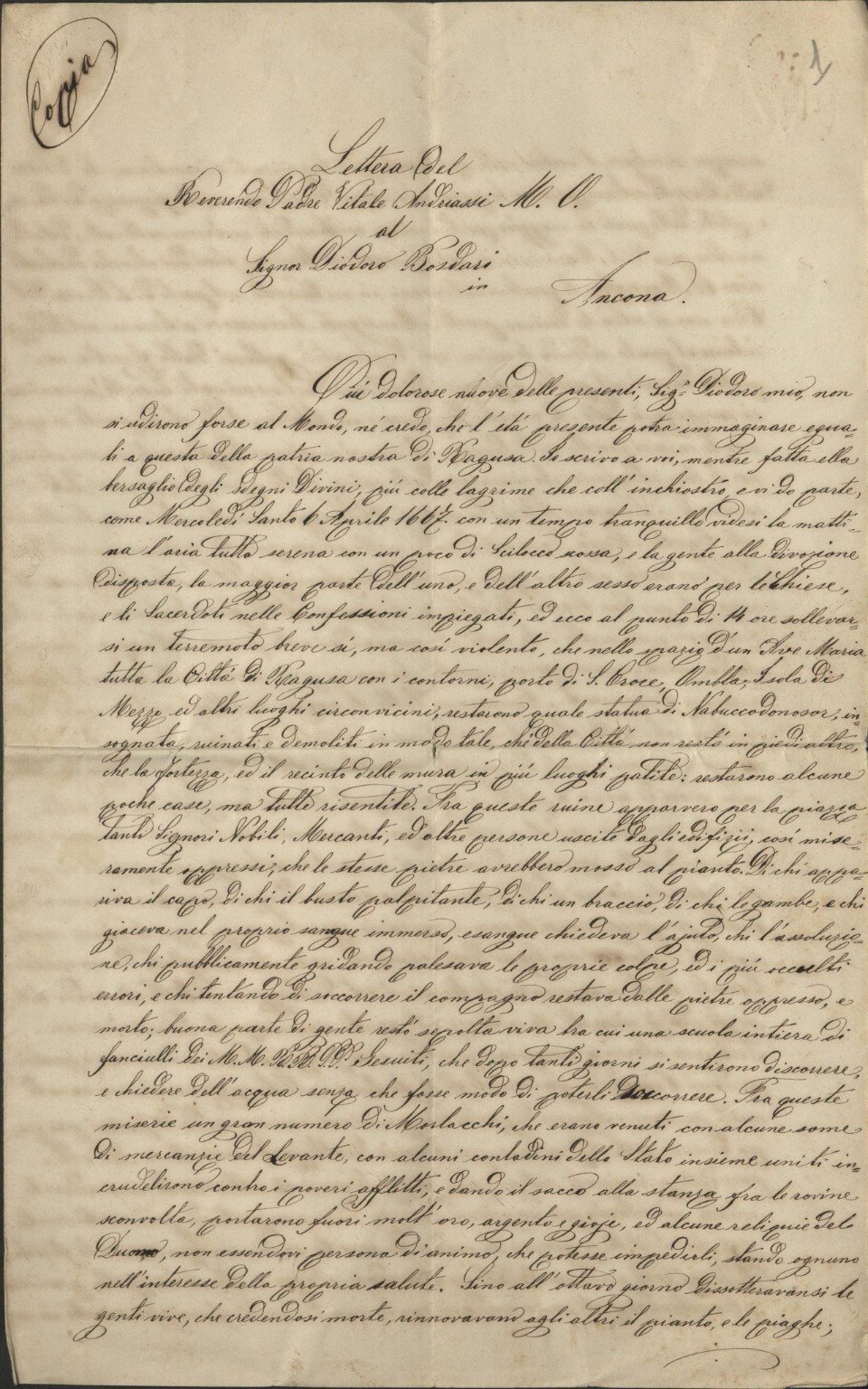
Vital Andrios’ full letter
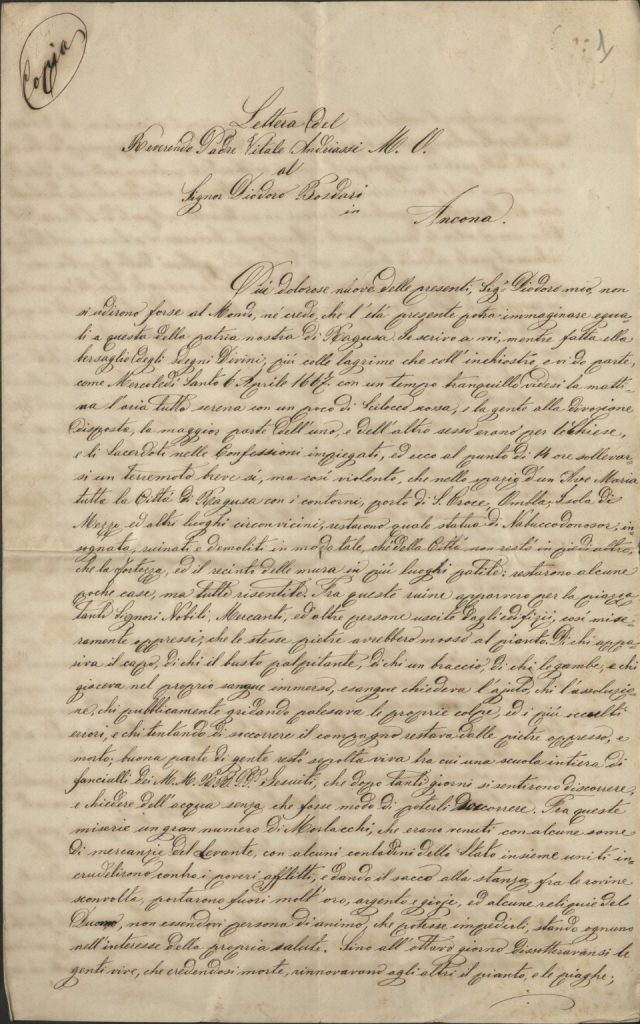
Letter of Reverend Father Vital Andriosi to Mr. Diodorus Bosdari in Ancona
“More sorrowful news than this, my dear Sir, has perhaps never been given to the world, nor do I believe that our age could imagine anything equal to the present misery of our homeland, Ragusa.
I write to you while my strength and spirit are failing. Every person here writes with tears rather than ink, as on Holy Wednesday, April 6th, 1667, on a most tranquil morning, at about the eighth hour of the day, a horrible and terrifying earthquake shook like lightning through the whole country and the city.
It ruined and brought down all the churches, monasteries, palaces, houses, and every other building within the walls, not leaving a single one intact. The greater part collapsed and was utterly destroyed. Buried beneath the ruins remained the majority of the inhabitants—innumerable souls—among them many nobles and merchants, of whom no trace can now be found. Of those who escaped, most were wounded, and many crushed under the rubble.
The city remained in such a state that everywhere one sees only horror and misery. Not a church, not a monastery, remained standing where one might take refuge. Religious men and nuns perished in large part, and only a few were saved.
Countless corpses were buried under the ruins; others were consumed by the fire that followed the earthquake. The entire city was left burned and destroyed. Tears and blood run through the streets, and there is no remedy. Bodies torn apart lie where they cannot be removed from the wreckage.
The people cry out, each mourning their own. The streets are full of blood. Most of the noble families are extinguished. Extreme poverty reigns. There is no more bread, no wine, no provisions. The few men left wander lost, without shelter, without aid.
Nothing remains but ruin, death, fire, and ashes.
In this state of misery, I have barely enough life left to give Your Lordship this account of what has happened.
From Ragusa, April 6th, 1667
Your most humble servant,
Vital Andriosi ”
Historical analysis
This letter is one of the rarest testimonies about the Dubrovnik earthquake, which shows us in dramatic tones the pain and destruction of that magnificent city. The fact that the author was an Albanian priest from Shkodra makes this source even more precious for our history, showing us the strong cultural, commercial and spiritual ties between Albania and Ragusa.
The event of 1667 marked the end of an era for the Republic of Ragusa. Although the city was rebuilt, it never regained its former grandeur.
Conclusion
The story of the Dubrovnik earthquake remains a powerful reminder of the fragility of civilizations. The archives preserve this ancient voice, coming from an Albanian, to show future generations how in a matter of minutes the glory of an entire city can be extinguished.