Editorial note: the verse excerpts below retain the source’s Albanian and Italian wording. The Albanian transcription is unclear in places; a reliable English verse translation requires comparison with the original print.
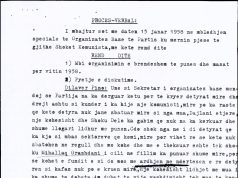
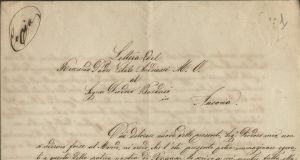
At the end of the 19th century, the Italian-Albanian Catholic priest Fr. Leonardo De Martino , known for his translations and patriotic and religious creativity, brought to the Albanian public one of the most moving poems of the Italian poet Tommaso Grossi : “Il lamento della prigioniera” (“The Prisoner’s Lament”). This poem, skillfully translated into Albanian, is preserved in a rare document of cultural value, published in 1879 in Prizren.
Content: A voice locked in the darkness speaking to a swallow
The poem is written as a heartfelt dialogue between an imprisoned woman and a swallow singing near her window. In the Albanian poetic translation, the swallow becomes a symbol of freedom, while the girl’s voice gives voice to all those who are closed, forgotten, separated from the world.
Excerpt from the translation:
MBJ DALNDISË E SEKRETËNTISËME,
KI RRII N’NJËJUN N’AT BALKTE,
AT FAR KANGË KAK LOTTUSEMË
PËR GJITHË NADIE TUI KENNTE…
VËTTUN-KIKIA NË HARRIM,
E PRËI FATIT IT LISCINËME…
KJIAI, SE S’KËE MA T’MIRË DERMAN,
KJIAI, DALNDISË, ME ZANIN TAN’.
Context: Prizren, 1879 – an Albanian cultural center under the Ottoman Empire
Published in Prizren on November 11, 1879 , this poem is one of the first examples of the translation of European poetry into Albanian. Fr. Leonardo De Martino, who served as an apostolic missionary, translated the poem into the Gheg dialect while preserving the metrical structure , the melody of the voice , and the emotional depth of the original.
Literary and historical value
This document is evidence:
- The high poetic level of translations into Albanian since the 19th century;
- Of efforts to enrich Albanian literature with foreign works of universal value;
- The role of Albanian clergy in the development of national culture.
Excerpt from the Italian original
(“Il lamento della prigioniera” – Tommaso Grossi)
RONDINELLA PELLEGRINA,
CHE TI POSI IN SUL VERONE,
RICANTANDO OGNI MATTINA
QUELLA FIEVOLE CANZONE…
SOLITARIA NELL’OBLIO,
DAL TUO SPOSO ABBANDONATA,
PIANGI FORSE AL PIANTO MIO…