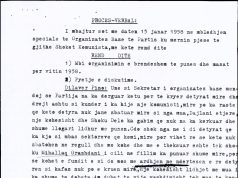
In March 1991, while Albania was experiencing the greatest political earthquake since the establishment of the communist regime, a rare document was drafted in the offices of the Party of Labor Committee for the Shkodra district: a report that described in clear words and without camouflage the catastrophic state of the Party organization in the countryside and the city . It was the first time that the PPSH, with its own mouth, admitted that its power was fading .
📍 A city that no longer obeyed even the Party
The report, originally dated March 1991, speaks of a comprehensive crisis of trust, structure and authority . Some of the claims are surprising, especially for an organization that had built its own myth of invincibility for decades:
“In the villages of Dajçi and Postriba, the villagers no longer accept any commands from the brigades. They have entered the cooperative lands themselves and are working them according to their will.”
This is the de facto collapse of collectivization , precisely in one of the Party’s ideological bastions.
🧍♂️ Members without dues, without meetings, without convictions
In the city, the situation was even more dire. On the streets of Shkodra, since January 1991, people no longer hid their political opinions . The PPSH no longer intimidated anyone.
“In neighborhood organizations, the number of participants in meetings is less than half of the members. The secretaries of the organizations can no longer go to anyone’s door, because the door is not even opened for them.”
The report clearly mentions:
- Many members have stopped paying their monthly dues ;
- There are organizations that have not held meetings since December 1990 ;
- The number of voluntary departures from the PPSH is increasing;
- In certain areas, such as Rrenc, Velipojë and Dobraç, no active structures exist anymore .
🛠️ “They are selling the work tools, or taking them home”
The report focuses specifically on the industry and construction sector. In the Mechanical Plant:
“Employees have started taking tools home. They claim they are theirs or say they will keep them, but in fact they are selling them.”
The Construction Combine states:
“Discipline has disappeared. No one respects the hierarchy. No one speaks for the Party line. The meetings are mocking, with notes of irony and rebellion.”
🧠 When the Politburo doesn’t know what to do anymore: the discussions of March 1991
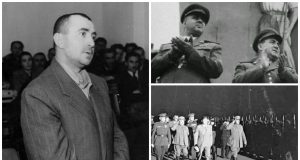
The document includes the minutes of a meeting of the Political Bureau of the Party of Labour of Albania , dated March 6, 1991 , just a few days before the dissolution of its structures. Present: Ramiz Alia, Adil Çarçani, Hekuran Isai, Pali Miska, Llambi Gegprifti, Besnik Bekteshi, Spiro Dede, Xhelil Gjoni, Vangjel Çërava, etc.
🗣️ Ramiz Alia: “We are no longer able to lead”
Ramiz Alia admits it directly:
“In this state we are in, with the structures we have, we are no longer able to lead. We have fallen behind reality. We have not properly understood the speed of change.”
🔥 Xhelil Gjoni: “People took it out of spite”
Harsh and emotional, Xhelil Gjoni explodes:
“They have hated us. We are no longer trusted. At every Party meeting, people demand that the word ‘leadership’ not be mentioned! We have gone against the values of the people ourselves.”
He also mentions specific names that are “sabotaging organizations from within,” but admits that he has neither the means nor the climate to intervene.
📉 Adil Çarçani: “They don’t obey me either below or above”
The country’s Prime Minister, Adil Çarçani, admits that the state apparatus has been paralyzed:
“The ministries don’t function like they used to. They don’t answer me. In the districts, decisions are no longer acted upon. The departments are waiting. We are moving with the inertia of habit.”
🗨️ Hekuran Isai: “Security structures no longer give us guarantees”
Even the Minister of the Interior , responsible for the strictest internal control, admits:
“We get reports, but we no longer have the will to intervene. We no longer have support. No one is afraid anymore. In many cities, people curse at officers and nothing happens to them.”
🧾 A document that buries the PPSH with its own hands
At the end of the report, it’s a desperate attempt to find hope, but it doesn’t contain any plan of action. It simply says:
“Take measures for reorganization and in-depth analysis of the situation at every base. Hold accountable. Open up to the masses.”
But time had passed.
🧨 Why is this document rare?
This report is not a journalist’s analysis or a post-1990s testimony . This is an official internal document , with signatures, typed by the Central Committee editorial staff, with names mentioned and official dates – the clearest evidence that the PPSH understood its end before announcing it .