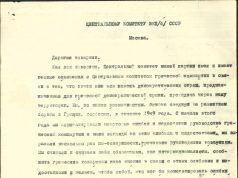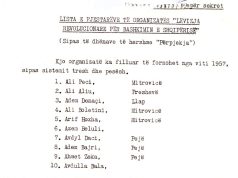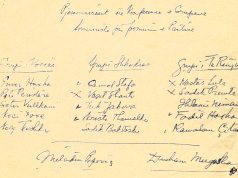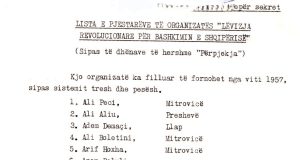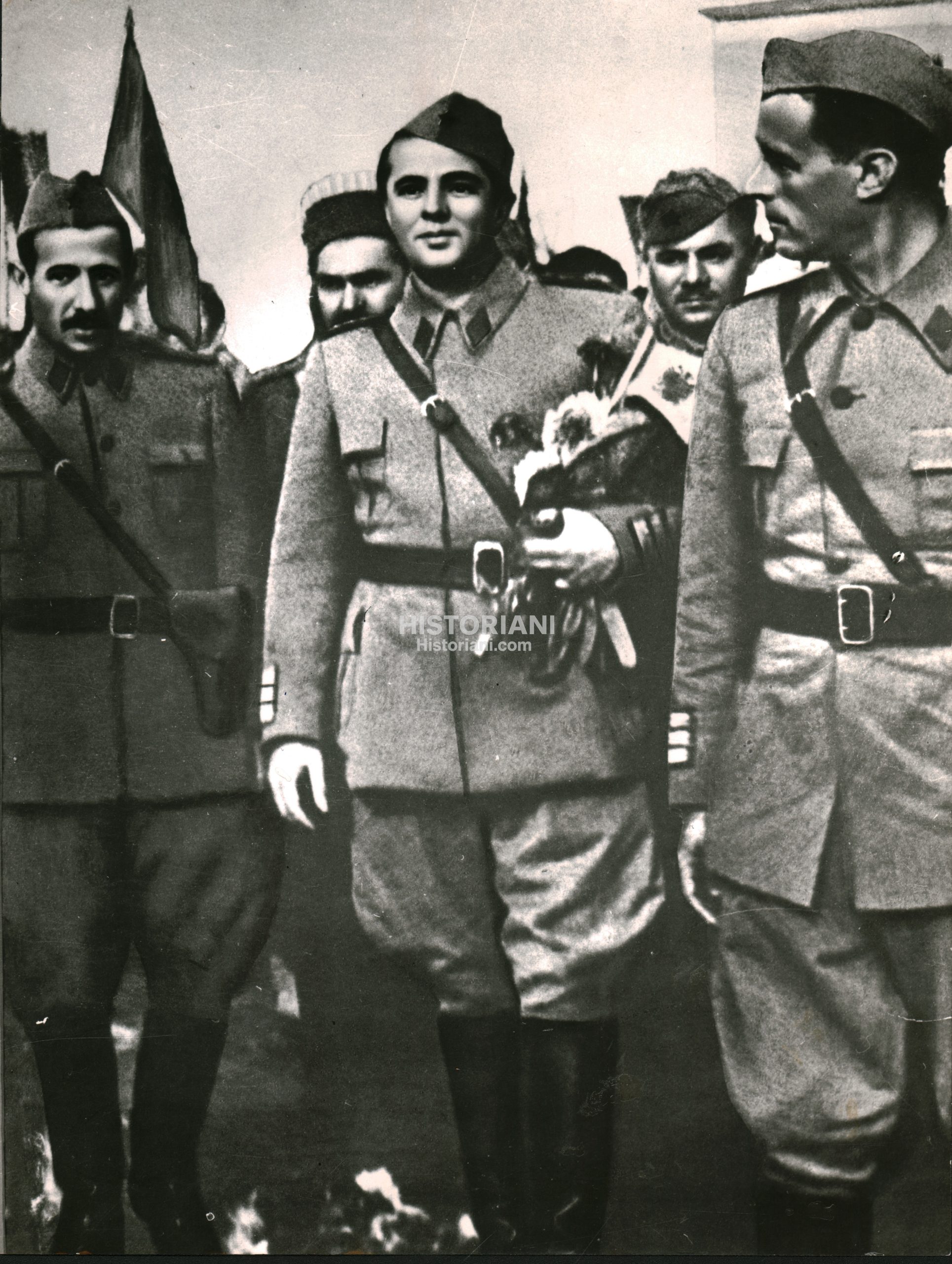
The year 1943 represents one of the most dramatic moments in Albanian history. After the capitulation of fascist Italy in September, German troops entered Albania, taking control of the territory and creating a new political and military situation. The archival document of the fund F.14APL-1943-9.1 sheds light on the internal relations, political movements and clashes that accompanied this period.
The relations of the German occupiers with Albanian groups
The document clearly reflects the Germans’ efforts to stabilize their power by relying on local forces. They sought to create a new Albanian administration, ready to cooperate against the partisan forces.
“The Germans do not intend to stay in Albania for long, but want to keep the country quiet to secure the roads and use the natural resources.”
In this context, the Germans maintained ties with elements of the National Front and other conservative groups, hoping that these forces would guarantee stability and order.
The National Liberation Front and the rise of communist influence
On the other hand, the document notes the growing influence of the National Liberation Front , which was increasingly emerging as an organized political and military force. In the mountainous areas, the partisans had gained popular support and were increasingly strengthening their authority.
“The communists are working persistently to establish their power in the villages, organizing national liberation councils and winning the sympathy of the population.”
This contrast between the German-backed forces and the Partisan Front clearly depicts the deep political division that accompanied Albania during the war .
Political clashes and lack of unity
The document shows that Albania in 1943 suffered from a profound lack of political unity . The Balli Kombëtar, which initially had a patriotic rhetoric, was often reluctant to cooperate with the communists. Meanwhile, other local groups preferred to maintain their autonomy, not joining either side.
“None of the Albanian groups is capable of taking power on their own, so the Germans are playing with them like chess pieces for their own interests.”
The state of the population – between fear and hope
An important part of the document concerns the situation of the population. Many Albanians, tired of the war, only wanted peace and security. But supply crises, German raids, and reprisals against villages made life increasingly difficult.
However, the report emphasizes that national consciousness was growing and more and more people saw in the partisan struggle a hope for freedom.
Conclusion: Albania at a crossroads
This archival document depicts Albania in 1943 as a country at a crossroads: on one side the German occupiers with their local supporters, on the other side partisan forces aiming for national liberation and revolution. This contrast would later culminate in the decisive clash of the National Liberation War , which would determine the fate of Albania after 1944.